Starting Kindergarten Strong: How Allied Health Can Support Your School’s Transition Program
The transition into kindergarten is one of the most important opportunities schools have to understand their incoming students and set them up for a positive start.
Every child arrives at school with different strengths, experiences and levels of development. For teachers, this can mean spending the first weeks and sometimes months, working out which students need additional support and what that support should look like.
Early identification can help schools get ahead of this process.
At Allied Health Partnerships, we work alongside schools and preschools to support Kindergarten transitions through a range of practical, school-focused allied health services — helping educators build a clearer picture of their incoming students and identify areas where additional support may be beneficial.
Below are a list of some of the support we can provide:
Multidisciplinary School Readiness Screeners
Our Multidisciplinary School Readiness Screeners provide schools with an opportunity to gain early insight into the skills that support successful participation in kindergarten.
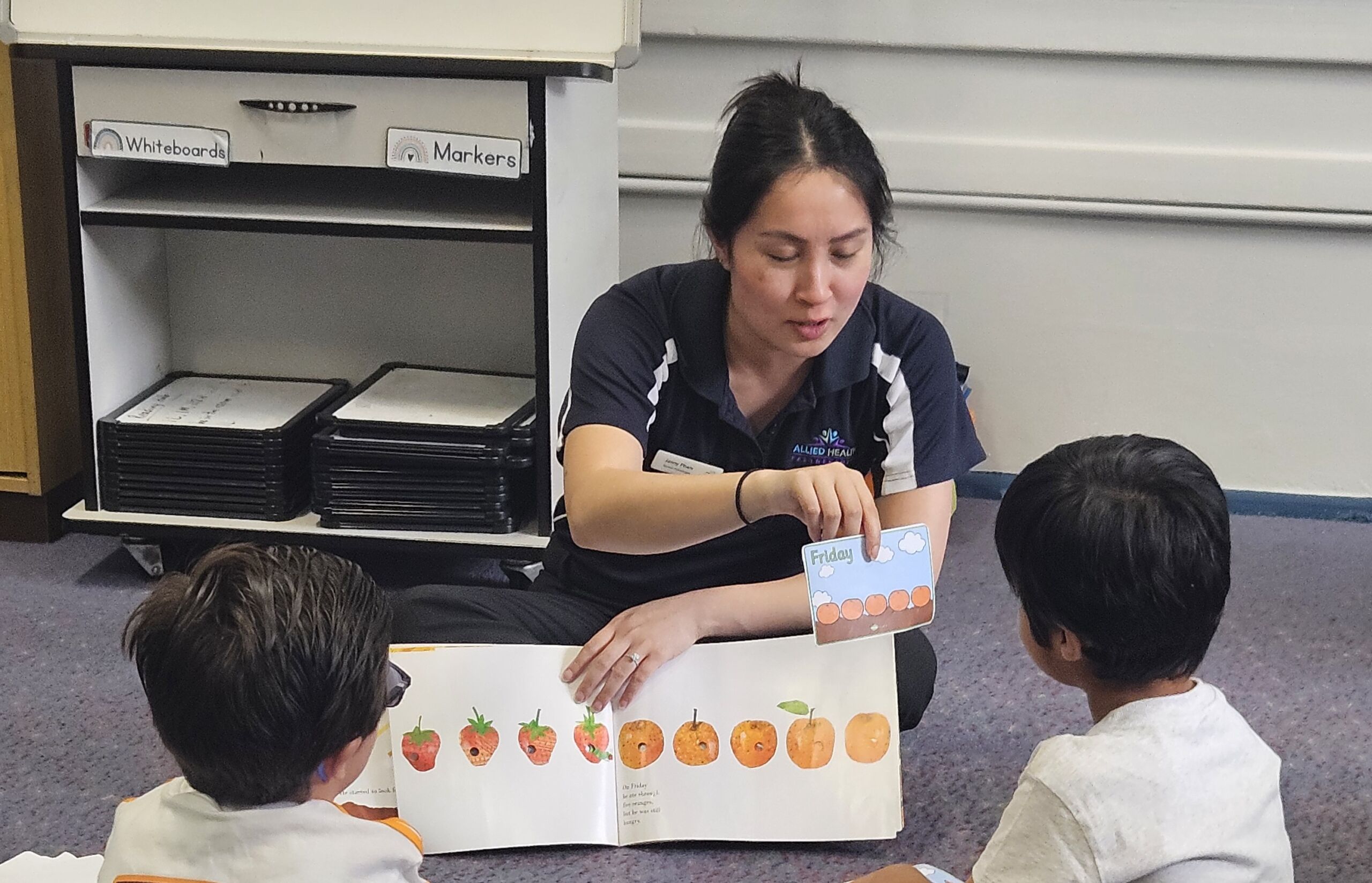
Allied health professionals engage children in fun, age-appropriate activities designed to explore areas such as:
- Communication and language
- Early literacy and learning skills
- Fine and gross motor development
- Attention and participation
- Social communication
- Following instructions
- Hearing Screening
The multidisciplinary approach means schools can gain information across a range of developmental areas, rather than relying on one perspective.
Recently received feedback stated:
“The allied health professionals were friendly and made the children feel at ease. The activities the children took part in were engaging and age appropriate.”
This is particularly important when working with children who may be experiencing allied health screening for the first time.
Clear Information for Teachers
Screening is only useful if the information can be translated into something practical for, parents, teachers & educators.
Through this service our Schools receive clear reports that highlight areas of strength and areas that may require further consideration or support.
A parent shared:
“The report received a few days later was clear about NAME’s areas of need and easy to read due to the colour coding and tick a box layout.”
For teachers, having this information early can provide another valuable piece of the puzzle when planning classroom environments, routines, differentiation and support strategies.
It can also help schools identify where further assessment, intervention or consultation may be appropriate.
Discipline-Specific Screeners
Not every school needs the same approach.
Where a school has identified particular areas of concern, discipline-specific screeners can provide a more targeted look at specific skills.
This may include screening delivered by:
- Speech Pathologists
- Occupational Therapists
- Behaviour Therapists
- Other relevant allied health professionals
This targeted approach allows schools to build support around the needs of their students.
Observations: Seeing Skills in Context
Screening provides valuable information, but observation within an early learning environment can provide another perspective.
Our allied health professionals can conduct observations in preschool and early learning settings, looking at how children manage real-world situations such as:
- Group participation
- Following routines
- Communicating with peers and adults
- Transitions between activities
- Attention and engagement
- Fine and gross motor tasks
- Independence
- Social interaction
For teachers, this contextual information can be particularly valuable when considering how a child may approach the transition into a busy Kindergarten classroom.
Parent Information Sessions
Successful transitions involve more than the child.
Schools can also access parent information sessions designed to help families understand school readiness and the skills that support a successful start to school.
These sessions give schools an opportunity to provide consistent information to families while reinforcing the importance of working collaboratively with educators and allied health professionals.
Building Skills Before the First Day
For children who would benefit from additional preparation, School Readiness Groups, delivered at One Stop Allied Health & Medical Centre, provide an opportunity to practise key skills before commencing Kindergarten.
Groups can target areas including:
- Communication and social interaction
- Following instructions
- Attention and listening
- Fine motor and pre-writing skills
- Early literacy
- Independence
- Group participation
- Confidence with classroom-style routines
The aim is not to expect every child to arrive at school with exactly the same skill set.
Instead, it is about identifying where additional preparation may be helpful and providing opportunities to build those skills before the transition.
A Stronger Start Through Early Collaboration
One of the most valuable outcomes of school readiness screening is the opportunity for teachers, school leaders and allied health professionals to start the conversation early.
What are this child’s strengths?
Where might they need additional support?
What strategies could help them participate successfully?
Would further assessment or intervention be beneficial?
How can we work with families and professionals from the beginning?
Rather than waiting for concerns to emerge several months into Kindergarten, schools can begin the year with a stronger understanding of their students.
Kindergarten transition doesn’t have to start on the first day of school.
With the right preparation, collaboration and early identification, schools can begin supporting students before they walk through the Kindergarten gates.
Allied Health Partnerships works with schools to create bespoke Kindergarten transition programs, combining multidisciplinary school readiness screeners, discipline-specific screening, observations, parent information sessions and school readiness groups to suit the needs of each school community.
Because a strong start begins with understanding the child before the school year even begins.